
Pink Mailer RFQs: Define Content Visibility
How should buyers specify content visibility for pink poly mailers? Identify the exact offered bag and representative packed contents, agree the viewing conditions, and record what an observer can distinguish through each relevant area. Approve that defined sample and scope in writing. Pink colour, catalogue handling photographs and general packaging descriptions do not establish a measured opacity result or guarantee that every item will be concealed.
Official pink-mailer appearance reference. The catalogue handling scene does not establish whether packed contents remain visible; agree that check on the selected sample.
Start with the offered pink bag, then define the question
For buyers sourcing wholesale poly mailers for apparel, content visibility can be a separate purchasing decision from bag dimensions or sealing. A buyer may want to know whether a printed inner package, an item outline or readable wording can be distinguished after packing. Those are different observations. Ask which matters for the intended order before requesting a sample response.
Youlide lists Pink Poly Mailer Bags and describes their use for apparel and other lightweight goods. The reviewed catalogue identifies a pink version and several nominal sizes. It does not provide a quantified opacity value or a documented content-concealment result. Use the actual product as the enquiry reference, while asking the supplier what information and samples it can provide for this additional requirement.
Keep the bag reference specific. Include the quoted product line, selected nominal size, offered material description and any identified print or finish version. Do not assume that a different pink bag, a different size or a later material substitution will produce the same observation. The purpose is to connect the visibility discussion to the offered article, without inventing a new specification for the supplier.
Buying field
Requested supplier response
Bag identity
Quoted pink-mailer line, selected size and offered version linked to the actual sample.
Representative contents
Identified item or inner package, including the facing surface and any print used for comparison.
Packed state
How the contents are placed, where the bag is folded and which surfaces are reviewed.
Viewing conditions
The agreed illumination, background, viewing positions and any image-capture notes.
Observed information
Separate observations of an outline, colour patch, printed mark or readable text.
Approval scope
The sample and order references covered by the decision, plus matters left unconfirmed.
Choose contents that represent the purchasing concern
A visibility enquiry is easier to answer when the supplier knows what the buyer plans to pack. A light garment, a dark garment and an inner carton with bold printing are not interchangeable references. Provide an identified representative item or describe an agreed substitute. State which face will sit near the bag wall, and preserve that arrangement in the sample record.
If the concern is readable information, identify the relevant text or mark instead of asking only whether the bag looks opaque. If the concern is recognition of the item outline, state that separately. A sample may obscure one feature while leaving another distinguishable. The buyer should decide which observation is relevant to its own sales and packing process, then ask the supplier to respond within that scope.
Avoid sending confidential contents merely to create a demonstration. A buyer can propose a non-sensitive reference with an agreed appearance, provided the supplier confirms the substitution and its limits. The record should say what was actually reviewed. A convenient replacement must not quietly become proof for a different package or every future order.
Official pink range reference. Identify the individual bag and the offered version before discussing content visibility; the display does not define supplied quantities.
Record the viewing conditions without inventing a standard
Agree how the sample will be viewed before comparing observations. Ask the supplier to describe the available illumination and background, the areas being observed, and whether the reviewer is looking at an empty bag or the agreed packed sample. Record the relevant positions and setup in plain language. This article does not prescribe a universal light level, distance or optical measurement method.
Photographs can help identify a setup and communicate an observation, but they are not automatically equivalent to viewing the packed bag directly. Camera exposure, reflections and screen display may affect the image. Ask for the sample identifier beside the record and enough context to understand how the photograph was taken. Keep the image linked to its actual physical sample rather than treating an unlabelled picture as a general product guarantee.
Where the buyer needs a measured optical property, ask whether the supplier can propose an appropriate measurement method, result format and scope. Confirm those details with the relevant technical parties before including a numerical requirement in the order. Do not turn a visual sample discussion into a laboratory certificate or infer a value from catalogue colour.
Observe the packed sample, then state the limits
Review the areas that matter to the intended use. The bag face, a fold, an overlap and an area pulled around bulky contents may look different. Identify the area being discussed and record the actual packed arrangement. Do not stretch or otherwise alter the sample unless that condition forms part of the agreed review; catalogue handling scenes do not establish a standard procedure.
Write observations before conclusions. For example, the record can distinguish whether a reviewer noticed a broad shape, identified a colour contrast or could read the selected mark. The supplier and buyer should agree their own decision language and acceptable scope. This guide supplies no pass threshold and makes no claim that the listed pink bags meet an unstated requirement.
If the result is unsuitable, ask what revised bag or packing proposal the supplier can offer, and identify it as a new reference. A changed material description, additional inner packaging or revised packing arrangement requires its own confirmation. Do not attribute the difference to a particular ingredient, wall thickness or manufacturing cause unless the supplier provides evidence for that explanation.
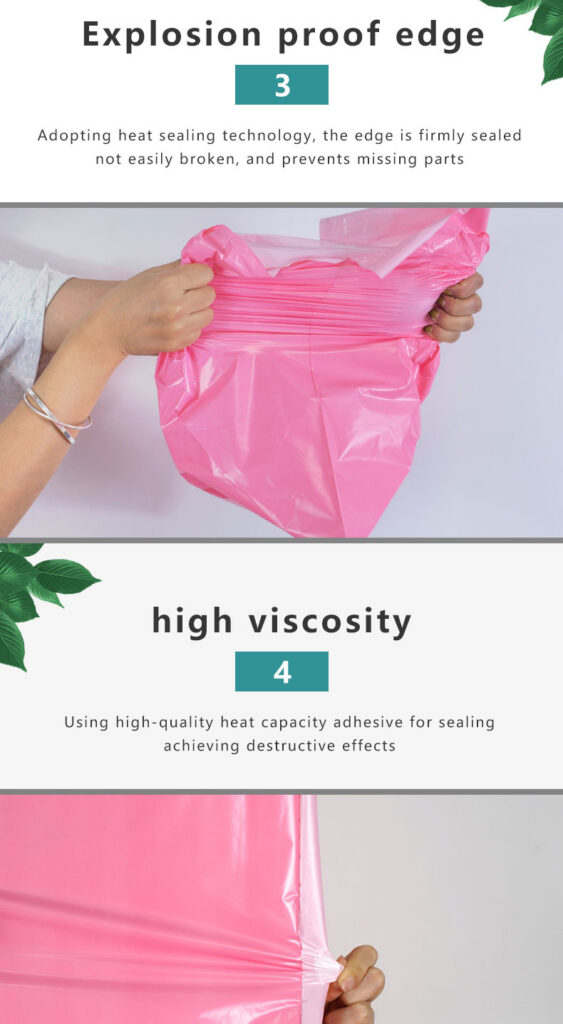
Official handling reference, without a witnessed performance or visibility result. A defined packed sample is needed to assess the buyer’s own contents.
Keep visibility approval separate from other bag approvals
Approval of a pink colour reference does not establish how well the contents are obscured. Approval of a shipping label trial answers a different question about the label-to-bag combination. Similarly, a closure review or body-edge drawing does not establish content visibility. Each record can refer to the same offered product while retaining its own decision and limits.
Connect the agreed visibility record to the sample and quotation references used for the order. Preserve the representative contents, observations, relevant images and written decision together. State whether the decision covers only the reviewed sample or another expressly agreed scope. Ask how the supplier will identify any proposed change before it is accepted, rather than assuming an approval extends to unreviewed substitutions.
For receiving teams, provide the identifying references and the agreed check instructions in a usable form. They need to know which bag and packed reference were approved, what they should compare and when a difference should be raised. This is a communication step; it does not by itself establish production consistency, a shipping guarantee or compliance with an external standard.
Buyer FAQ
Does pink colour prove that the contents cannot be seen?
No. The reviewed product identifies a pink bag but supplies no quantified opacity or documented content-visibility result. Ask about the actual offered version and representative packed sample.
Can catalogue stretching photographs answer this question?
They identify product appearance and handling scenes. They do not show a defined content-visibility review with agreed contents and conditions, and are not used here as performance proof.
Should every buyer use the same viewing setup?
The buyer and supplier should agree a setup appropriate to the purchasing question and document its limits. No universal distance, illumination level or acceptance value is invented here.
Is a photograph sufficient for approval?
Agree that scope explicitly. An image may help communicate an observation, while a direct sample review or a proposed measurement method may be needed for the buyer’s requirement.
What should the RFQ request first?
Request the selected bag reference, a proposal for the representative packed sample and viewing record, and the supplier’s confirmation of what the resulting evidence would and would not cover.
Review the actual Pink Poly Mailer Bags reference, then send the supplier your sample-review requirements. Use the packaging blog for related purchasing topics while keeping the content-visibility decision linked to its own sample evidence.
Identify the offered bag and representative packed contents.
Agree the viewing record and describe observed information.
Approve a defined scope and confirm proposed changes separately.
wholesale poly mailer bagsB2B supplier sample record