
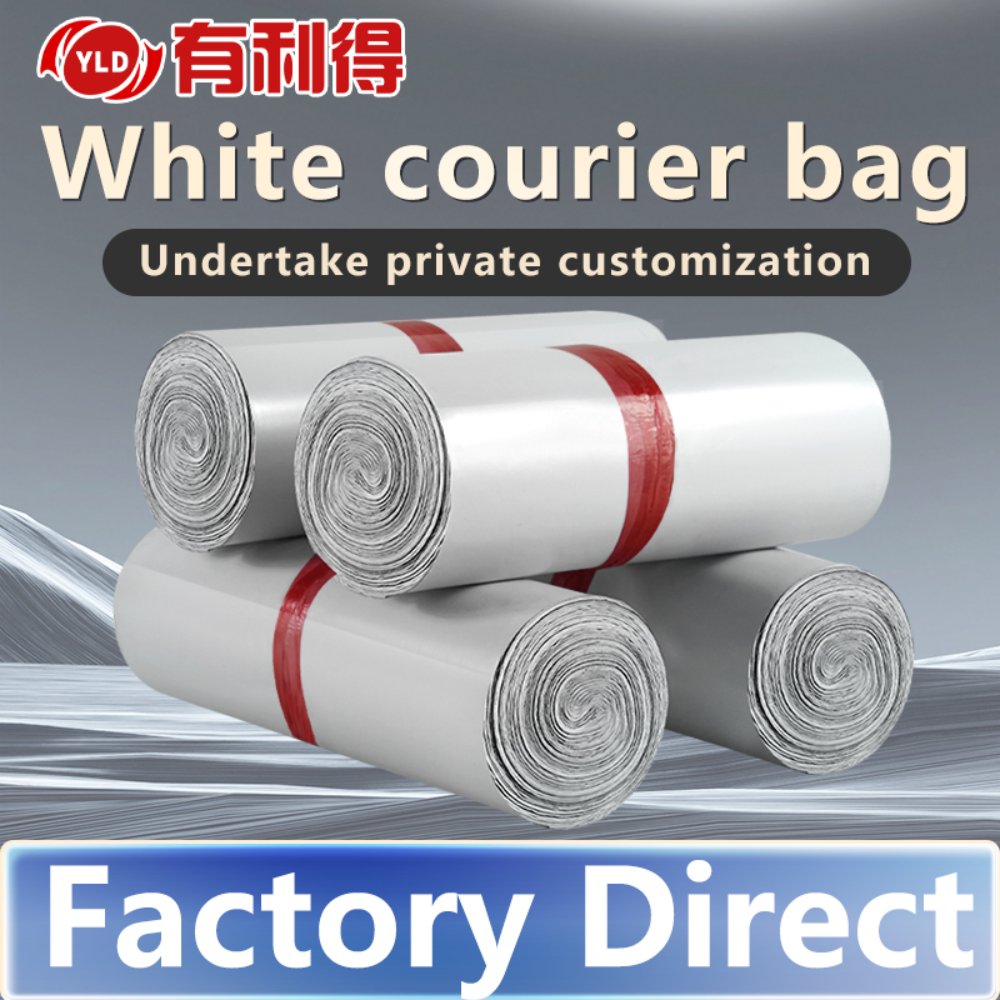
For white poly mailer thickness enquiries, ask what the supplier includes in the published double-layer total and which bag size the value covers. Keep the number of measured walls or layers, measurement location and supplier method explicit. Do not divide a catalogue total into a single-wall value or assume one thickness applies to every size.
Preserve the complete thickness statement
A buyer comparing wholesale white poly mailers needs to know what a thickness number includes. The White Heavy-Duty Poly Mailer Bags listing publishes “Total Thickness: 0.11 mm / 110 μm (double layer).” It also states that actual thickness may vary by bag size.
Keep the number, the total-thickness label, the double-layer wording and the size qualification together. They are supplier catalogue statements, not independent measurements in this article. Removing one part can make the specification appear more definite than the reviewed source supports.
Ask what double layer includes
Request the supplier’s explanation of the measurement scope. Does its double-layer wording refer to the bag walls included in a reading, a description of the material construction or another defined basis? The buyer should obtain that answer rather than choosing an interpretation from the phrase alone.
In particular, do not divide the published 110 μm total into a declared single-wall value without confirmation. A numerical calculation cannot establish what the supplier meant by the original label. Ask the supplier to state the offered value on its intended basis and identify what is included in that value.
A marked bag or material reference can help locate the measurement. Ask the supplier to identify the component and location used for the declared thickness. A catalogue roll photograph cannot show how many walls or layers were included in a measurement or how the sample was arranged.
Keep the offered thickness specific to the bag size
The page’s note about size variation is part of the source information. If an enquiry covers several bag sizes, ask the supplier for the thickness offered for each identified size. Do not copy the catalogue total into every quotation line and treat the resulting list as a confirmed size range.
The supplier may need to explain whether a proposed value is a nominal declaration, a measured result or another stated specification. Preserve that explanation with the offer. This article does not create a tolerance or an allowable range from the general note that actual thickness may vary.
Thickness field | Published reference | Clarification to request
Catalogue value | 0.11 mm / 110 μm | The value proposed for the exact offered bag.
Measurement scope | Total; double layer | Which walls, layers or defined component the value includes.
Bag size | Actual thickness may vary by size | Size identification and its corresponding offered thickness.
Measurement location | Not established by the short field | Identified location and sample arrangement.
Supporting record | Catalogue declaration | Supplier method or result reference and the version it covers.
Request a measurement description with the number
Ask the supplier to identify the method used for any measurement it supplies. The response should connect the result to the sample, location and scope already discussed. If the supplier provides a record, retain its date and identification with the corresponding quotation line.
Where a bag body, seal or flap might be confused in the discussion, ask the supplier to mark the relevant area. Do not assume that an unexplained reading concerns the same location as another offer. This is a request for comparable information, not an instruction to apply an invented test procedure.
Keep the units exactly stated in the response. The source supplies both mm and μm beside the same catalogue entry. A change in unit presentation should not hide a change in measurement scope, sample arrangement or offered bag size.
Separate thickness from material and performance language
The product page also describes virgin plastic, flexibility, adhesive sealing and a glossy finish. Those are separate supplier statements. A thickness field does not independently verify material origin, sealing performance or a strength result, and this article does not treat the promotional descriptions as tested outcomes.
Similarly, a photograph of pellets does not establish the resin content of the quoted bag. A hand-held material image is not a documented toughness or thickness test. Use those catalogue images to identify the discussion context while requesting the specific supplier information the enquiry requires.
• Keep the total value and double-layer label together.
• Ask which measured component and location the value concerns.
• Connect each bag size to its own offered thickness entry.
• Retain the supplier’s declaration or result without widening its scope.
If the buyer has a separate requirement for sealing or handling performance, state it separately and ask for relevant information. Do not select a guaranteed load capacity or shipping use solely from the published thickness number.
Compare revisions on the same basis
When a revised offer changes the bag size or thickness wording, ask whether the previous measurement basis still applies. A similar white appearance does not establish an unchanged specification. Keep the earlier response and identify the new proposal so that the purchasing team can see what has changed.
The clearest comparison uses an identified size, value, measurement scope and supporting reference for each offer. If one entry is missing, request it before treating the numbers as equivalent. An unexplained total should remain an open question rather than being converted into a buyer-approved single-wall specification.
Double-layer thickness questions
Can 110 μm be automatically stated as a single-wall value? No. The catalogue labels it as a double-layer total. Ask the supplier to define that basis and state any required single-wall information.
Does the catalogue value apply to every bag size? The source specifically says actual thickness may vary by bag size. Request a size-specific offer.
Does the variation note establish a tolerance? It does not supply a defined tolerance in the reviewed text. Obtain the supplier’s proposed specification rather than inventing a range.
Does a thicker-looking roll prove strength? A catalogue image does not establish thickness or a tested strength result. Keep those questions separate.
Send a size-specific thickness enquiry
Quote the full published thickness line through the contact page and identify the bag sizes being discussed. The catalogue and blog provide further packaging context. Ask for the offered value and its measurement scope together so that the quotation can be compared on a clear basis.
Product and contact references
https://yolidepack.com/product/white-heavy-duty-poly-mailer-bags/
https://yolidepack.com/contact/
https://yolidepack.com/products/
https://yolidepack.com/blog/